
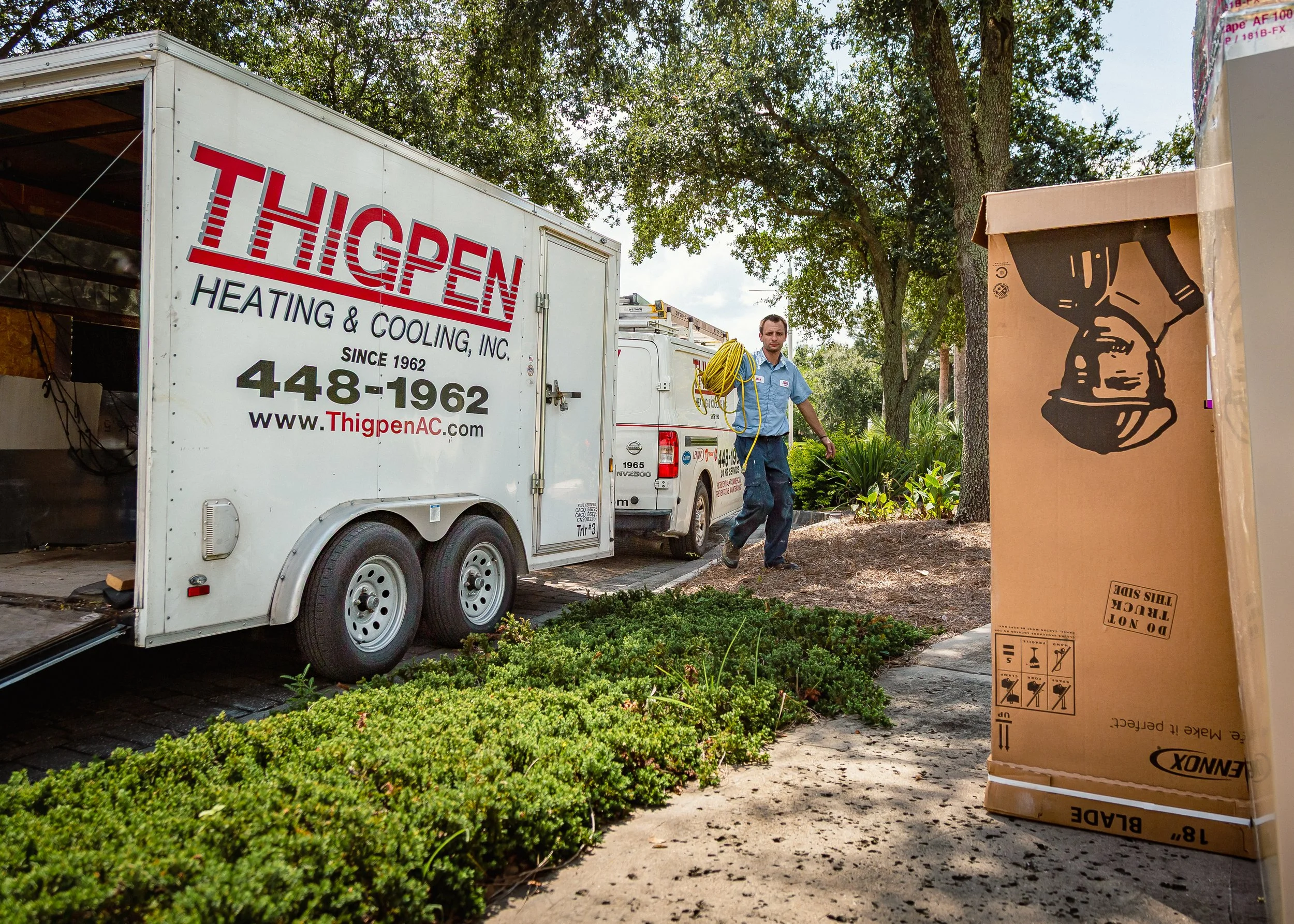
Upgrading or replacing your home’s heating and cooling system can be a confusing and often expensive process. Figuring out how to find the best system for your home is a confusing maze of learning about different types of HVAC systems, energy ratings, different brands, maintenance tips, and more.
Our team at Thigpen Heating & Cooling is committed to helping our clients find the best HVAC system for their home. Our promise is to make the HVAC buying process as seamless as possible. In this guide, we will outline the information you need to know when buying a new HVAC system, saving you time, money, and frustration throughout the process.
Understanding HVAC System Basics
An HVAC, or Heating, Ventilation, and Air Conditioning System, is responsible for maintaining your home’s indoor temperature and air quality year-round. While Florida may not have the harsh winters like our neighbors to the north, it is vital to still have a system that can handle any type of outdoor temperatures, whether it is a night that hits below freezing in January or a boiling hot afternoon in the middle of August.
There are many different types of HVAC systems but the four most common include:
Split Systems: Mostly used in residential buildings, this is the most common HVAC system. It consists of two separate components, one for heating and the other for cooling. One unit is inside (typically a heating unit in the basement or other indoor storage space) and the other is outside (usually a cooling system connected to the building’s ductwork). The system is controlled by a traditional thermostat and uses compressors and coils to create cool air and fans to direct warm air out of the building.
Packaged Heating and Cooling: While not as popular, packaged heating and cooling systems are great for smaller buildings. The heating and cooling components are combined in a single unit, typically outside on the roof or in an attic space. These systems are typically easier to maintain.
Duct-Free Mini-Split: These systems are great for homes without ductwork or for individual rooms or apartments. These are typically seen in office buildings, hotels, apartments, and multifamily homes. These systems include an outdoor compressor and indoor air unit for each zone with individual thermostats and power sources.
Portable Spot Coolers and Heat Pumps: These portable units are designed to either cool down or heat up rooms or manufacturing spaces. These coolers and pumps are a great option for homeowners who need a flexible solution that can move around if needed.
Determining which system is right for your home depends on many factors and is an important first step in knowing how to buy a new HVAC system.
Key Features to Consider
HVAC systems have many different features to choose from. One of our trusted technicians at Thigpen Heating & Cooling will go through the different options that not only enhance the comfort and efficiency of your system but offer you the best features for your budget. Some features to consider include:
Smart Thermostat Compatibility: Control your system with the simple touch of a remote or through an app on your phone when you are away from home.
Humidity Control: Necessary in Florida, this helps to maintain indoor comfort throughout the year, especially in the hot and humid summer months.
Variable-Speed Motors: This feature allows you to adjust the airflow for better temperature control with a quieter system.
Modulating Operation: Allows more precise temperature control and is more energy efficient.
Air Filtration: Reduces the number of allergens and other pollutants in your home, improving air quality.
Assessing Your Home’s HVAC Needs
Understanding the HVAC needs of your home is crucial in choosing the right system. An oversized or undersized system for your space can lead to poor performance and higher utility bills.
A trusted and experienced HVAC professional will conduct a Manual J calculation to determine the proper HVAC system for your home by looking at the square footage of the space, insulation quality, local climate, window placement, and the overall home layout. After conducting this calculation, your HVAC professional will be able to provide you with options for the best system for your needs.
Comparing HVAC Brands and Models
There are many reputable HVAC brands and manufacturers, but instead of focusing on name brands, it is better to look at the value and features they offer. Some areas to keep in mind include:
Warranty Terms and Conditions: Every (reputable) manufacturer will offer some limited warranty on their parts. At minimum, look for a 10-year parts warranty.
Availability of Parts and Service: Look for a system made by a brand that consistently has parts available in case replacements or repairs are needed. Look for a local team of experts who are able to come out and repair or maintain your system with a quick turnaround.
Reputation and Reviews: Reputation matters so choose a manufacturer who has a proven track record of quality products and high performance.
Installer Certifications: Choose a contractor that is certified or qualified to properly install high-quality systems. Thigpen Heating & Cooling is a Lennox Premier Dealer.
The Importance of Energy Efficiency
With the rising cost of energy bills, it is more important than ever for your HVAC system to be energy efficient. While the cost for the initial unit may be more up front, over time, an energy efficient system can save you thousands of dollars in energy costs.
When looking at energy efficient systems, consider the following:
SEER (Seasonal Energy Efficiency Ratio): This ratio measures the efficiency of air conditioner systems. A higher SEER rating equals a more energy efficient system with the average home HVAC system falling between 16 and 18. For even better efficiency, look for systems with a rating of 19 to 22+.
HSPF2 (Heating Seasonal Performance Factor): This measurement rates the heating efficiency of air-source heat pumps. The higher the HSPF2 rating is, the more energy efficient it is. As of January 1, 2023, the Department of Energy requires split system heat pumps to have a rating of 7.5 or higher and single-packaged heat pumps to have a rating of 6.7 or higher.
AFUE (Annual Fuel Utilization Efficiency): This rating measures the heating efficiency of a furnace or boiler. A rating of 90% or higher is considered to be a good AFUE rating.
When looking at HVAC systems, look for ENERGY STAR® certified systems for units that perform well, have better energy efficiency, and are durable.
Installation: DIY vs. Professional
Now that you have chosen your HVAC system, it needs to be installed. Unless you are trained, it is best to leave the final installation to the professionals. HVAC systems are complicated and require expert precision to ensure accurate set-up. A HVAC professional like the team at Thigpen Heating & Cooling . will ensure that every component is installed correctly and works properly.
Budgeting for Your New HVAC System
It is no secret that new HVAC systems are expensive, but they are an important investment in the comfort and safety of your home. Here are a few tips to consider when budgeting for your HVAC system:
Get Multiple Quotes: Reach out to several reputable companies in your area and compare estimates. While it may be tempting to go with the lowest quote or first offer, weigh your options carefully.
Consider The Savings: The initial upfront costs can be a sticker shock but consider investing in energy-efficient systems not only for the long-term savings, but for potential federal tax credits.
Factor In The Installation Costs: Not only do you need to purchase the HVAC equipment itself, but you also need to hire someone to install the system.
Look For Financing Options: Many companies offer a range of financing options. At Thigpen Heating & Cooling, we have a short five minute process with no money down and payment options as low as $170 per month with approved credit.
Long-Term Maintenance Tips
After you have had your new HVAC system professionally installed, it is important to keep it well-maintained to extend its lifespan and preserve its efficiency. Some best practices to follow include:
Seasonal Tune-Ups: Have your system inspected twice a year, ideally before summer and winter.
Change Your Air Filters Regularly: Depending on your system and its usage, aim to change your filters every 1-3 months to keep your system performing at its best and maintaining air quality.
Ensure Airflow Is Clear: Check your ductwork and vents often, clearing away any blockage or restrictions to airflow. Ensure that you remove leaves and other debris away from your outdoor units.
Keep An Eye On Performance: If you notice your energy bills increasing every month or hear any unusual noises, call a professional to take a look.
Finding the right HVAC system for your home is important for a comfortable and happy living environment. When you understand your home’s needs and work with a trusted professional like the team at Thigpen Heating & Cooling, you can make an informed decision and purchase the correct HVAC system for your needs and budget.
If you are ready to purchase a new HVAC system or have questions, do not hesitate to reach out to our team at Thigpen Heating & Cooling today.
